Air Source Heat Pump installation is quite a simple process – in fact it’s not much different to installing any new heating system. The good news is that in most cases you won’t need to make any major changes to your home to install an air source heat pump.
Installing an Air Source Heat Pump
The chances are you may have the infrastructure in place already to install a heat pump – such as somewhere to put a water tank (you probably already have one so all that’s needed is to replace it and connect it up to your existing system).
Here are the main components that make up a typical Air Source Heat Pump Installation
Fan and Compressor
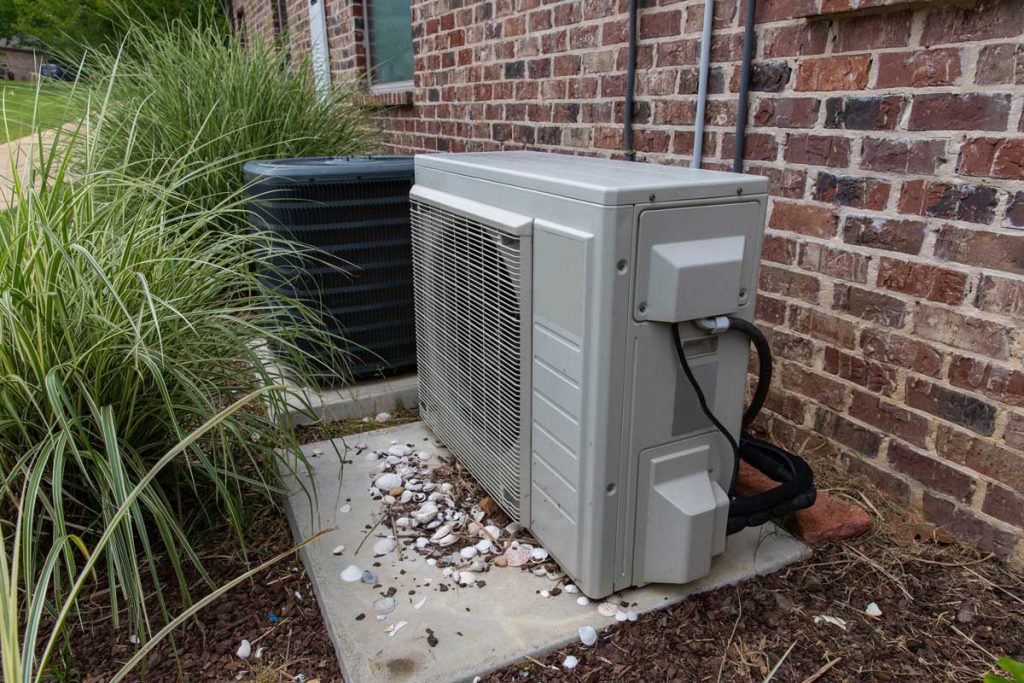
There is a unit installed outside of your property that houses the fan and compressor. This has two pipes that send a refrigerant to and from the water tank. The fan blows air from the outside over the refrigerant which heats it up, even if the air is very cold – even if the outside temperature is as low as 30ºC the refrigerant will still heat up and transfer that heat to the water tank.
There is also an electric supply that connects the heat pump to the mains or any other electricity sources such as Solar panels.
Water Tank
The compressor will need a special water tank with an element similar to a large kettle in it. This element will be where the heated refrigerant warms up the water. An additional element can also be installed that will heat the water from mains electricity in the rare occasion that the heat pump cannot keep up with demand.
The tank can be installed in the airing cupboard, replacing your current immersion heater if you have one, or in the loft.
Controls
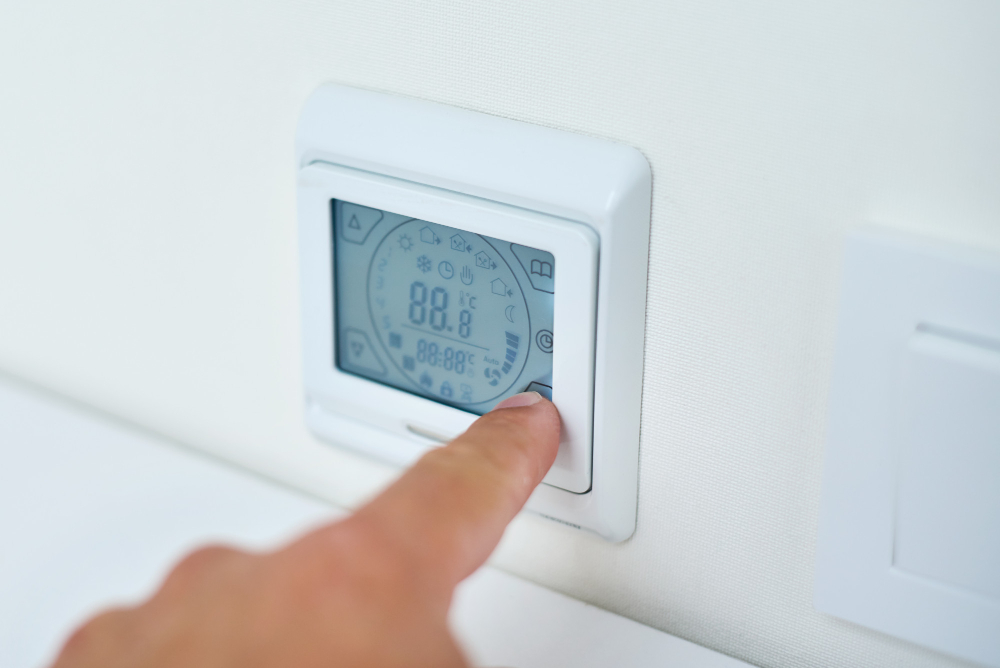
The heat pump will need its own thermostat and controller installing, very similar to the heating controls you already have. There is generally a thermostat that lives in the main room of the house, then the timer and controller are installed near the water tank.
Important! Choose an Approved Installer.
It is very important that you have your Heat Pump installed by a Microgeneration Certification Scheme (MCS) member. Your heat pump must have an MCS Certificate for you to be eligible to receive any government grants or to qualify for Renewable Heat Incentive (RHI) payments.
Altering your property when installing an Air Source Heat Pump
In order to get the best out of your new Air Source heat pump installation you may want to consider making some alterations to your home.
Underfloor Heating
Heat pumps work best with underfloor heating systems, although you can install radiators that work with the system too.
Insulation
It’s easier to maintain a constant temperature when heat loss is reduced as much as possible. Make sure your loft or roof is adequately insulated, and have your wall cavities insulated if possible.
Windows and doors lose a lot of heat so you may want to ensure that your windows are as efficient as possible buy upgrading.
Carbon Zero Electricity
While your heat pump will significantly reduce your carbon emissions, you can reduce then further. Change your electric supplier to a green energy tarrif. You can also use solar power to run your heat pump, either way it’s possible to achieve Carbon Zero very easily.
Get help installing your Air Source Heat Pump
To find out if your home is suitable for an Air Source Heat Pump installation and a Government Grant, click here to complete our 30 second survey.